
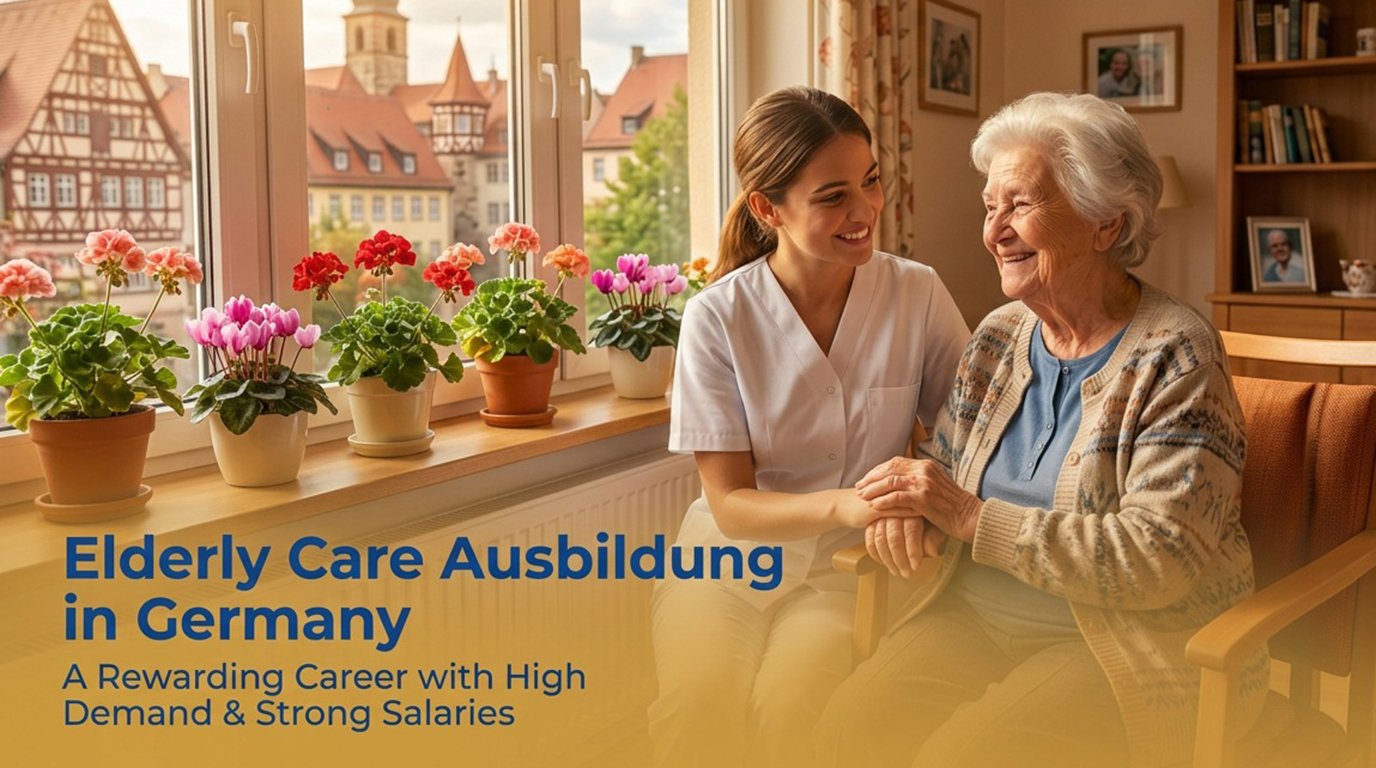
Germany’s population is ageing rapidly. By 2035, over one in four Germans will be aged 65 or older – and the country’s elderly care sector is already facing a critical shortage of qualified professionals. For Filipinos who have a caring nature and want to make a real difference in people’s lives, the elderly care Ausbildung is one of the most in-demand and personally rewarding pathways into Germany.
This guide explains everything you need to know about the Altenpfleger Ausbildung – what you will do, what you will earn, and how to get started from the Philippines.
Why Germany Needs Your Caring Skills
Germany currently has over 100,000 unfilled positions in the elderly care sector. Filipino carers are particularly valued for their:
- Natural empathy and patience with elderly individuals
- Strong work ethic and dedication to quality care
- Respect for elders – deeply embedded in Filipino culture and highly appreciated in German care settings
- Experience in Philippine hospitals, nursing homes, and home care
💡 Pro Tip: The Altenpfleger Ausbildung is one of the most secure career paths in Germany – not just for new, but for decades to come. Germany’s demographic trend means elderly care professionals will be in high demand regardless of economic cycles.
The Ausbildung in Detail
| Feature | Details |
|---|---|
| Official title | Pflegefachmann/Pflegefachfrau (since 2020) |
| Duration | 3 years |
| Structure | Practical training in care home + theoretical lessons at Pflegeschule |
| Language requirement | B2 German (mandatory) |
| Monthly salary Year 1 | €1,100 –€1,350 |
| Monthly salary Year 3 | €1,350 –€1,600 |
| After qualification | €2,200 – ₫3,000+gross/mo |
What You Will Do Day to Day
Practical Training Tasks
- Personal care: assisting with bathing, grooming, dressing, and mobility
- Medication management: administering medications according to care plans
- Nutrition support: assisting with meals and monitoring nutritional intake
- Medical monitoring: vital signs, wound care, bandages
- Social and emotional support: conversing with residents, accompanying activities
- Documentation: maintaining accurate care records (in German)
- Palliative care: supporting residents and families at end of life
🌍 Culture Check: German elderly residents and their families have high expectations for professional care standards. Filipino trainees who bring warmth and genuine care – combined with German professional standards – are consistently rated as exceptional by employers and residents.
Language: Why B2 Is Non-Negotiable
Elderly care requires B2 German without exception:
- Residents may have hearing difficulties or cognitive decline – clear, precise German is essential
- Medical documentation and care plans are entirely in German
- Emergency situations require immediate and accurate verbal communication
⚠️ Watch Out: Some agencies advertise elderly care positions with B1 German. While a small number of employers may accept B1 for initial application, the visa will only be issued with B2, and the actual work requires B2 from Day 1.
Salary During Training and After Qualification
| Phase | Monthly Gross | Approx. Net | Notes |
|---|---|---|---|
| Ausbildung Year 1 | €1,100 – 1,350 | ~€890 – 1,090 | Varies by employer (Tarif) |
| Ausbildung Year 2 | €1,200 – 1,450 | ~€970 – 1,160 | Automatic annual increase |
| Ausbildung Year 3 | €1,350 – 1,600 | ~€1,085 – 1,280 | Automatic annual increase |
| After qualification (entry) | ₫2,100 – 2,700 | ~€1,650 – 2,100 | Full Pflegefachkraft salary |
| With night/weekend shifts | €2,500 – 3,200+ | ~€1,950 – 2,500+ | Shift premiums add 20-40% |
💡 Pro Tip: The Pflegemindestlohn (minimum wage for care workers) was raised to over ₫17/hour in 2024, making elderly care one of the better-paid vocational professions in Germany relative to training requirements.
The Fast Track to Permanent Residency
Elderly care is listed in Germany’s shortage occupation list (Engpassberufe). This means:
- Accelerated path to permanent residency: after just 2 years of full-time employment as a Pflegefachkraft (instead of the standard 5 years)
- Priority processing at immigration authorities for shortage occupation workers
- Higher job security – demand is not dependent on economic cycles
Where Can You Work After Qualification?
- Residential care homes (Pflegeheim/Seniorenheim)
- Dementia care units (Demenzstation)
- Home care services (Ambulante Pflege)
- Day care centres (Tagespflege)
- Rehabilitation centres
- Hospitals – geriatric wards
- Hospice and palliative care units
Step-by-Step: How to Start from the Philippines
- Start German (A1 to B2). B2 takes 14-18 months from zero. Start now.
- Document your experience. Get reference letters from Philippine hospitals or nursing homes.
- Find a German employer. Work with AusbildungForFilipinos or apply directly to German care homes.
- Sign your Ausbildungsvertrag. This is your visa anchor.
- Pass your B2 exam at Goethe-Institut, telc, or OSD.
- Apply for your visa at the German Embassy Manila via VFS Global.
- Arrive and begin your training. Your patients need you – and Germany needs you.
Check Your Elderly Care Ausbildung Eligibility
Whether you are a fresh graduate, an experienced carer, or a nurse looking to transition – our team at AusbildungForFilipinos can assess your specific profile and find the best elderly care placement for you in Germany.